• About
  • Gi Help
  • Jiu-Jitsu Events
    • Past Events
  • Female Black Belts
    • North America
    • Europe
    • South America
    • Australia/New Zealand
    • Middle East/Asia
    • Unknow Location
  • Resources
  • Media
  • Photos

BJJ For Women

~ Women's BJJ Blog: Interviews, Jiu- Jitsu Events and All Things Fenom

BJJ For Women

Tag Archives: women’s bjj

Gi Weaves 102: Single Weave Gi and Double Weave Gi Mystery

17 Sunday Jun 2018

Posted by fenomkimonos in Gis for Women and Girls, Products, Women's Gis

≈ 4 Comments

Tags

bjj gi, brushed baby canvas, chess weave, cotton canvas, diamond weave, double weave, fenom kimonos, judo gi, plain weave, sashiko weave, single weave, single weave vs double weave gis, women's bjj

Our article, Gi Weaves 101, has become one of the most viewed blog post and continues to be a great resource for anyone in the market for a new women’s BJJ gi. Since we get a lot of questions about single weave and double weave gis, we decided  to do a write-up about new fabrics we are using; what single weave and double weave fabrics are, and how to tell the difference between those two.

SASHIKO WEAVE or RICE GRAIN WEAVE is the most commonly misnamed fabric by jiu-jitsu bloggers and gi reviewers. A great deal of sources call it a single weave. Sashiko weave can be single or double weave. As a matter of fact, any fabric can be single or double weave, depending on if there is only one layer of fabric or if there are two layers of fabric that are interconnected. In a single weave fabric a set of weft (horizontal yarn) and a set of warp (vertical yarn) are interlaced together in different patterns. The pattern of the warp and weft is called the weave of the fabric. In a double weave, a fabric should contain two detectable weave structures, two layers, which are connected to one another in some way. Below are some photos to illustrate the difference between single and double weave.

Single weave on top, double weave on bottom.
Single weave vs double weave thickness.


Single weave fabric on top, double weave on the bottom.
Single weave fabric has one layer, double weave fabric can be pulled apart to show two layers.

Sashiko weave has been used for judo gis for decades, it’s readily available and much more reasonably priced than pearl weave. It can be light weight 350-550 gsm single weave to 750-950 gsm double weave,  the options are endless. A lot of jiu-jitsu gis in sashiko weave are in light weight category, very affordable and considered a good starter gi. However, cheaper gis shrink quite a bit, so sizing can be tricky.

More expensive double weave gis have controlled shrinkage due to extensive pre-treatment but those are not common in BJJ scene. Double weave gi sleeves are very difficult to grab, they are thick and rigid. The whole gi set weighs twice as much as a single weave gi. Most BJJ hobbyists don’t ever experience a double weave gi unless they cross train at a judo dojo and get their grips on an International Judo Federation approved competition gi. So, if you are buying a jiu-jitsu gi and the description is 350-550 gsm weave (pearl or any others), you are getting a single weave gi. 

CHESS WEAVE combines plain weave with Sashiko weave to form a chess board look. Plain weave is the most common and basic weave where weft yarn passes over and under warp yarn alternately. Chess weave fabric feels softer than pearl weave but not as soft as crystal weave. It feels light-weight and does not stretch out excessively. It is a great addition to any gi collection if you are getting bored with pearl weave. Colored gis in chess weave will look more textured and dramatic after a while as the raised squares fade at a different rate than the flat squares. This is not better than any other fabric; it simply has a captivating look.

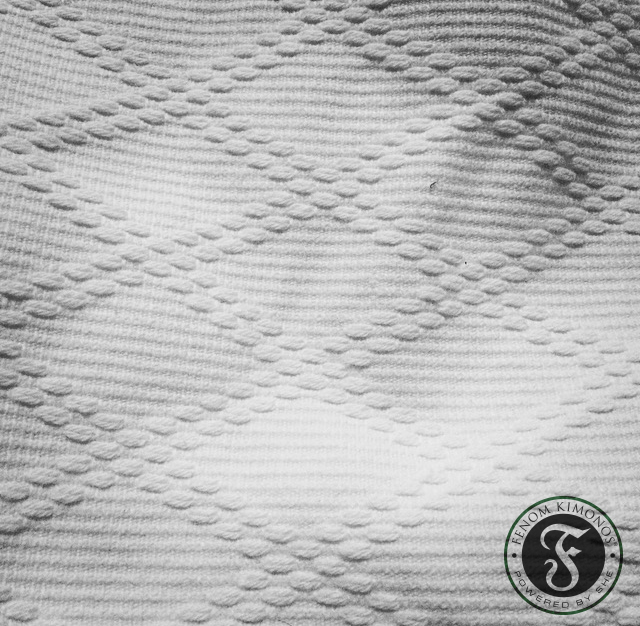
DIAMOND WEAVE or diamond pattern Sashiko weave fabric is widely used in judo and is not new in the market. It is mostly used for the skirt part of the judo gi but can be made into a BJJ gi. The lightweight but sturdy plain weave or twill weave is combined with diamond pattern in Sashiko weave. Sashiko yarn direction is horizontal which makes the fabric stronger to withstand the stretching and pulling. The fabric feels light and airy, does not shrink excessively and is comfortable on skin. It has a unique textured look that should become popular in jiu-jitsu because of its affordability and availability.

Canvas or Cotton Duck is a popular fabric choise for workwear, tote bags, beach umbrellas, awnings and is the base for the best oil paintings. It is a plain woven fabric that is sturdy, dense and extremely durable. Cotton duck or duck is the correct name for the fabric but people outside of textile industry call it canvas. Canvas, especially heavy-duty canvas, is not a popular choice for gi pants. The fabric is very stiff and full length, double layer reinforcement makes the pants twice as heavy as rip stop pants. The pants will last for years if you have the patience to wear them and put up with the stiff, slightly uncomfortable fabric. Canvas will soften up a little over time but it will never be as comfortable as cotton drill. Customers have very strong feelings about these pants; they are serious nail rippers, you cannot get a grip without hurting your hands.

Brushed canvas looks just like canvas but feels like cotton drill. The  fabric has been treated and brushed on both sides so the stiffness you experience with canvas has been eliminated. The best way to describe the feel of this fabric is to think of a flannel shirt, it’s that comfy. Of all the fabric choices for pants, this has to be our new favorite. Brushed canvas is comfortable but does not stretch out as much as cotton drill, very soft yet sturdy and there is no unexpected shrinkage. So far it has been very well received by customers and we hope to add more brushed canvas pants in different colors to our product line.

No matter what fabric you prefer, it is important to take good care of your gi . Read more about gi care and stain removal here.

Women Only BJJ Camp in Estonia

22 Wednesday Mar 2017

Posted by fenomkimonos in News and Events, Women's BJJ

≈ Leave a comment

Tags

eesti bjj, estonian bjj girls, fenom kimonos, tallinn, women's bjj, women's bjj in estonia, women's brazilian jiu jitsu

Estonian BJJ Girls group, spearheaded by Laura Mallene, is organizing its very first women only BJJ camp in Tallinn, Estonia at the end of April.  The number of ladies taking up BJJ in this tiny county has grown exponentially in the past few years and they have displayed outstanding results at international tournaments. The camp welcomes jiu-jitsu women from any team and at any experience level for a fun weekend of learning, sharing and friendly rolls.

Helin and Liisi

  • Camp instructors are: Purple belt, Liisi Vaht, who is the highest ranking local female and 3D Treening women’s class instructor. She is 2017 IBJJF European Championship feather weight bronze medalist and 2017 Nordic Open gold medalist.
  • Purple belt, Helin Paara, who has been training BJJ since 2003 and took home gold medals at 2016 IMMAF European Open Championships and 2016 Finnish Female Fight Cup absolute weight class in purple/brown/black belt divison.
  • Blue belt, Kadri Vilba, who is the 2017 national champion in women’s wrestling and also an active MMA and BJJ competitor.

Don’t underestimate the skills of these ladies; Helin and Liisi have a very unique style cultivated by SBG Estonia head coach Priit Mihkelson. He is the innovator of Grillkana position and has spent years on developing his open guard game. Due to high demand, Priit Mihkelson will be teaching at the women’s camp as well. His teaching style is very detail oriented and highly entertaining at the same time.

The camp costs 15.00 euros for one day and 25.00 euros for two days. Travel from Finland, Sweden, Latvia and Lithuania is relatively short and inexpensive and for budget conscious travellers, the gym, Korrus 3, is offering overnight stay for a minimum donation of 5.00 euros. Don’t miss it; it’s a quaint place to visit and learn jiu-jitsu.

More info about the camp on Estonian BJJ Girls FB page.

eesti-naiste-laager

Image

Happy Valentine’s Day

14 Tuesday Feb 2017

Tags

fenom kimonos, Love, love what you do, women's bjj

fenom-valentines-day

Posted by fenomkimonos | Filed under Women's BJJ

≈ 1 Comment

How Have You Lived I Want to Ask You…

14 Wednesday Sep 2016

Posted by fenomkimonos in Fenomenal Women, Women's BJJ

≈ 1 Comment

Tags

blue belt, Chomolungma, fenom navy blue gi, liudmila mikhanovskaia, Manaslu, Mount Everest, muay thai, nepal, winter swimming, women's bjj, world adventure society

A few months ago we got an email from a customer from Thailand who was having trouble completing an order on our website. The transaction eventually went through, the gi arrived at the destination and we even received a photo and a thank you note. This sparked our interest and we asked the customer, Liudmila, a few questions. What we discovered next was truly incredible.

Not only is she a jiu-jitsu blue belt but she has climbed Mount Everest! She is a philosophy teacher, a translator and writes beautiful poetry.  Her other passions include high-altitude mountaineering, winter swimming, Muay Thai and traveling. Most recently she was named World Adventure Society’s first ambassador in Russia. Everyone please meet Liudmila Mikhanovskaia!

Liudmila In Nepal after a religious ceremony.

Liudmila In Nepal after a religious ceremony.

First of all, your English is superb. How did you get so good at it? And how did you start poetry in foreign language? This really requires a very good knowledge of the language and nuances. 

Thank you! My mother’s English was very good by the standards of the time, and she started teaching me when I was four years old. Besides, I went to a school that was known for quality English instruction. My school classes were supplemented with regular short language study trips to the UK. In my last few years at school I began to attend the British Council and there won a competition for a 1-year full scholarship to Queen Mary College, University of London. After the year in London, I continued to live and study abroad.

Although my education is in Philosophy (I hold a Master’s), I choose to work as a translator and editor because the job allows me the freedom to travel and to carry on with the research I had initially wanted to do for a PhD but decided to pursue outside of the academic framework. In both my education and my job there is a lot of emphasis on the importance of language, on the exact meaning and weight of words, which, I feel, makes it relatively easy to for me to express myself in poetry. I have to say, however, that neither in my prose nor in my poems do I use complex words or heavy grammatical structures: I write to understand myself and to keep track of my thoughts and feelings as honestly, openly and simply as I can.

How many languages do you speak?

In addition to my native Russian, I can speak four other languages to varying degrees of proficiency: English, Spanish, Korean and Thai. I also have 5 years of background in German and know some Italian. Up next is Sanskrit.

From Russia to Thailand. This is quite a journey. What made you make that move and how did you cope with the logistics?

From my previous answers you may have guessed that Thailand was not the first stop on my journey. I stared attending Queen Mary in London when I was 17, which was almost 12 years ago. I have since lived, studied and worked in many countries: the Netherlands, Spain, Malta, Philippines, Nepal, South Korea and Thailand.

I originally traveled to Thailand specifically to train for an expedition and was living on location at the training camp in Bangkok. As my reasons for staying in the county changed over time, so did my living arrangements: during this past year of training BJJ I was renting an apartment in Bangkok. I have always done my translation and editing work in my ‘free’ time, usually at night, so I could train, study and explore in the daytime.

Regarding living in Thailand, it is a country very open to expats and travelers, whose needs, be it accommodation, food, healthcare, training or anything else, really, are readily catered for. I enjoyed my time in Bangkok and found it to be very comfortable.

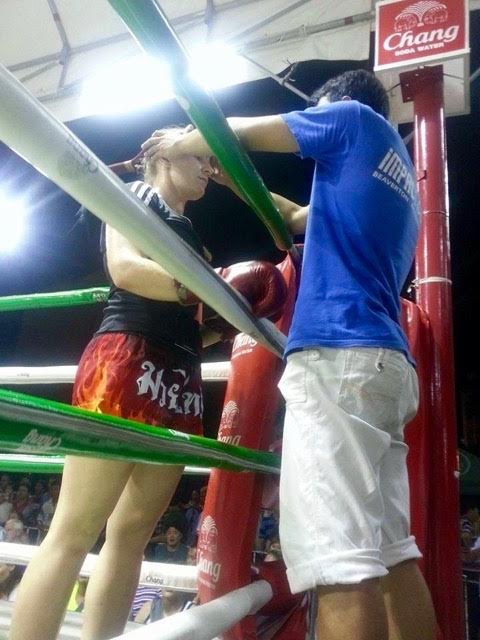
In Thailand you trained Muay Thai as part of your preparation for the climb. You trained extensively for 3 years and then stopped. Were you tired or just bored? Was it difficult to walk away from something you invested quite a bit of time into?

Before pro Muay Thai fight in Chiang Mai, Thailand.

Before pro Muay Thai fight in Chiang Mai, Thailand.

I spent about 4 years living and training in Thailand, on and off. For the 3 years I trained exclusively in Muay Thai but about a year ago I discovered BJJ and later MMA, and added them to my training roster.

I did not necessarily lose interest in Muay Thai, get tired or bored: as I was getting better and more familiar with the martial art, I began to feel space opening up for me to do something else, something different. I generally don’t like to be wasteful with my resources, so I was simply slightly frustrated with myself in the context of Muay Thai while I was searching for a way to fill that newly opened space. Once I discovered BJJ, wrestling and MMA, my love of and interest in Muay Thai returned, and remain as strong as ever to this day.

That being said, I have walked away from many activities I had dedicated much of myself to. I believe that quitting for the right reasons is a better choice than staying for the wrong ones.

Tell us more about climbing. What is the hardest part? 

For me personally the hardest part, without a doubt, is the mental game. It is very different from the immediate emotional challenges that one is faced with in martial arts training or in a fight or match.

High-altitude mountaineering expeditions, which is my favorite kind of climbing, can last for over two months. A million things can and do happen in the unpredictable mountain setting; a million thoughts and doubts arise and go to sleep with you every night; you grow weaker and weaker as days go by because the body, although it does acclimatize to higher elevations, still doesn’t get enough oxygen to function at 100%. By the start of the summit push, you are likely to be feeling drained or even sick. Although you are by then used to it, it is still hard to believe you can climb to a place called the Death Zone (above 8000 meters), get to the top of a mountain, get back down and even enjoy yourself in that state.

You have to do something your mind keeps telling you that you can’t do continuously in a remote, cold, unpredictable environment for days in a row. High-altitude mountaineering requires great mental stability and love of what you’re doing. Thus, although the mental aspect of climbing is the hardest one to manage for me, it is also the most fascinating and educational.
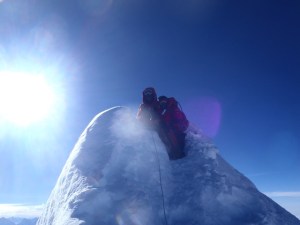
On the summit of Manaslu, the 8th highest mountain in the world at 26781 ft.

On the summit of Manaslu, the 8th highest mountain in the world at 26781 ft.

Do you carry all your gear to the very top (tent, sleeping bad, food) or leave at a camp closest to the top?

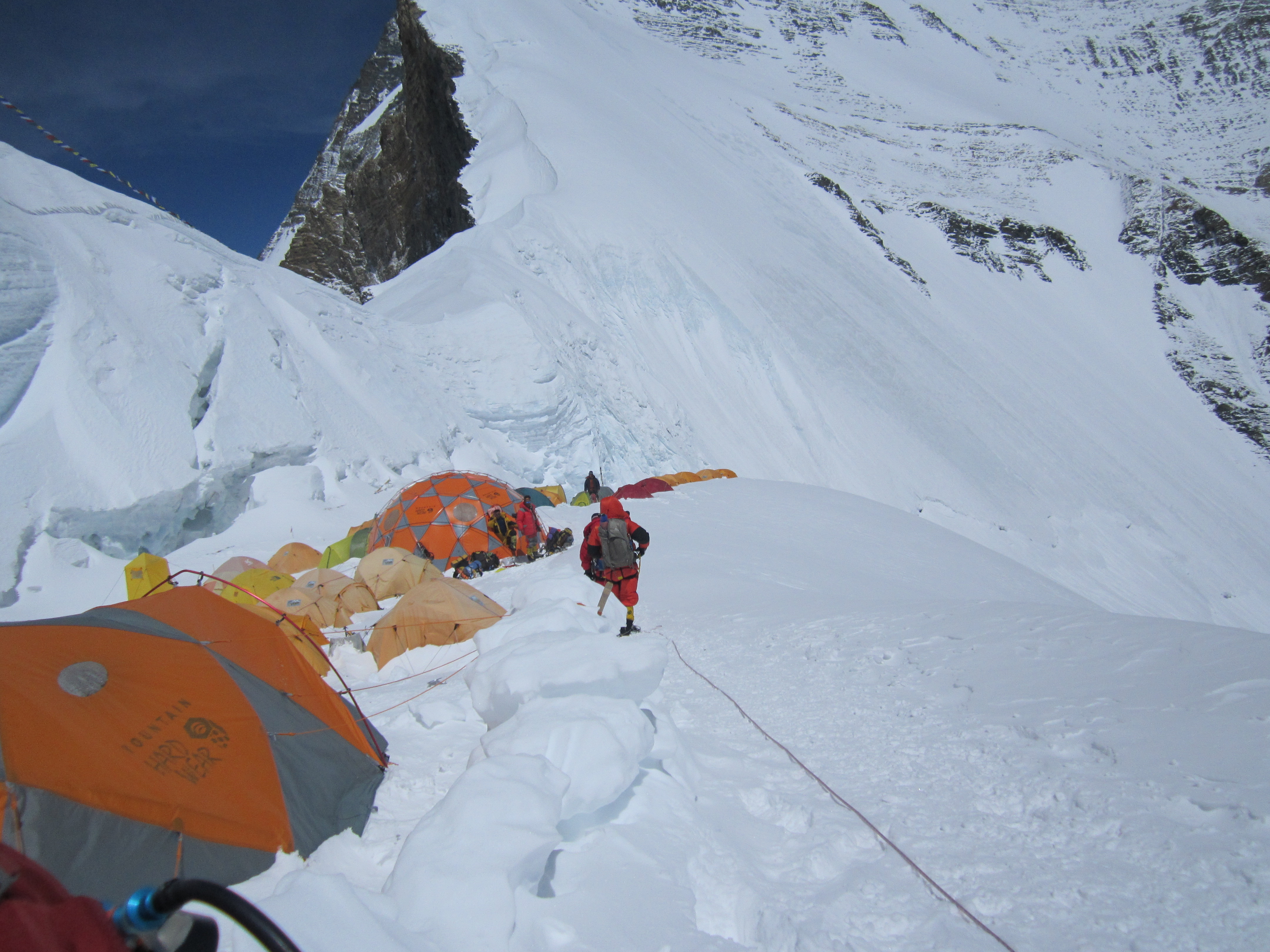
During high-altitude mountaineering expeditions several high camps are typically established between base camp and the summit. Tents are erected and some gear stored in those camps in preparation for the summit push. This way climbers don’t have to waste time and energy when the weather window is forecast to open. On summit day, which is when you climb from your highest camp to the summit and as far back down the mountain as you can, on ascent you only have the bare necessities in your backpack: water, a snack, a few essential spares, a camera, a walkie-talkie, oxygen bottle(s) if you’re using the gas, etc. You want to travel as light as possible on the way up, but you will have to collect all of your gear and carry it with you on descent through the lower camps.

Why is the descent so hard? From what we read, it is harder than climbing up. Is it true?

Passing Camp 1 on the way down.

Passing Camp 1 on the way down.

Many factors play into making the descent harder and more dangerous than the way to the top. First of all, there’s the physical aspect. Your body is beyond exhausted on summit day at the end of a long expedition; your muscles and organs are starved of oxygen, sleep and nutrients. The longer you stay in the Death Zone above 8000 meters, where oxygen pressure in the air is insufficient to sustain human life for longer than a couple of days, the more of your body’s systems malfunction or shut down. Problems, more or less grave, with motor skills, coordination, vision and breathing, for example, are common and obviously dangerous on treacherous mountain terrain.

An important sub-aspect of the previous one is the compromised brain activity. The brain needs oxygen to do its job properly, and after a long period of deprivation climbers struggle to think and to concentrate; hallucinations and memory black-outs are experienced by many. That, coupled with extreme physical strain, is not a recipe for a safe climb, be it down or up.

In my opinion, what really makes the descent more dangerous than the ascent is the psychological aspect of the challenge: whether you’ve made it to the top or turned around early, you know you’re done. If you’re done, you can relax, right? The hard part is over! And whenever you so much as whisper to yourself that something is easy, you automatically loosen your focus and your grip on the situation. That is the worst thing to do in a place where you are headed for safety but are still hours or days away from it. This is why mountaineers always remind themselves that “summit is only halfway”.

You climbed Mount Everest in 2012 with oxygen and attempted to climb again in 2013 without oxygen. Why was it important for you to do it the second time knowing how hard it is? Only 3 women have done it without oxygen before you and one passed away on the descent. Were you not scared?

Liudmila and Pasang Wongchu Sherpa on the Summit of Everest May, 19, 2012

Liudmila and Pasang Wongchu Sherpa on the Summit of Everest May, 19, 2012

This may sound cheesy, but I wanted to climb Everest again and to invest absolutely all of myself into the oxygen-less ascent because I just loved the mountain so much. It had been my wildest dream to at least climb on it, but even as I was leaving Tibet a summiteer, looking back on Chomolungma, the mountain’s Tibetan name, I was still seeing a dream, and more grand and unattainable than ever. It was bitter-sweet to realize how big of a heart it turned out that I had, and to not need that heart for anything outside of the high Himalaya.

I suppose, once you learn how dazzling the things your eyes can see may be, how strong your body and mind are potentially, how brave and free your spirit really is – once you know your true power, you want to feel it reverberate through your system at all times and with the greatest possible intensity. It’s not unlike an obsession or an addiction – one so great, it simply swallows up fear.

After 6 days of your climb with no oxygen, you aborted the mission. How hard was it? Are you happy with the decision?

I aborted the climb at base camp. I was in excellent physical shape after running 10km every day and training Muay Thai for 5-6 hours a day 6 days a week for 3 months in Thailand. I felt fairly confident I would be able to give the ascent without bottled oxygen as good of a shot as any climber out there.

However, I just didn’t dare step on the slopes of the mountain. I was not afraid – I was ashamed: ashamed that the small, plain, ordinary me would attempt something so amazing and beautiful. In my eyes, I was perfectly prepared but unworthy of the gift of that opportunity. I was unable to process an experience of that magnitude back then, so there was nothing for me to do but leave. Although I can’t say I am happy with that decision, I can’t regret it either because the person I was at the time could not have made a different choice. Would it be different today? Absolutely!

You had a very serious health scare that made you spend months in bed. Do you want to talk more about it? 

I am a cancer survivor. I was diagnosed and treated almost two years ago. I am currently in good health and back in Nepal, close to the Himalaya, which it was my biggest regret that I wouldn’t see again when my prognosis was looking grim.

Do you still do winter swimming? Being in tropical climate, training must be limited.

I do it even though I’m not doing it, if that makes any sense. I won a silver medal as part of a team and a personal endurance swimming medal in the Ice Swimming Cup of Siberia and the Far East on a little more than a week’s notice. There was nowhere to actually swim to prepare, so I dug out a little pool in a small mountain river running through the Siberian village I was spending time in, and just sat there for a few minutes every day, focusing on controlling my breathing in the icy water.

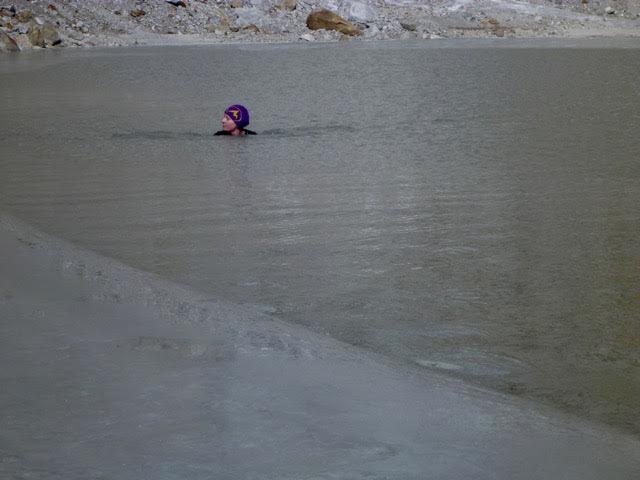
Swimming in Lake Pumori near Everest at about 17000 ft in December 2012.

Swimming in Lake Pumori near Everest at about 17000 ft in December 2012.

Swimming was the first sport I ever took up and I have loved cold water (but not cold showers, mind you) since I was a baby. I am not a fast or a very technical swimmer but I enjoy myself in the water, extremely cold water too, and I trust it. This allows me to swim for extended periods of time even without a lot of training. I hope to attempt my next ‘test’ swim – my first after cancer – in a couple of weeks’ time in Tilicho Lake at 4949 meters/16237 feet near Manang in Nepal.

After all you have gone through starting BJJ must feel like one of the easiest things. Do you find it challenging? Why do you enjoy it? Do you think you will stick with it til your black belt?
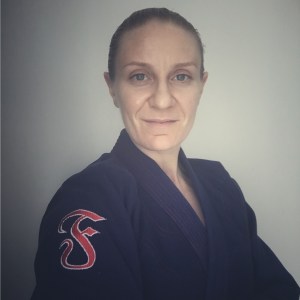
Liudmila in Navy Fenom

Nothing I have ever learned has come easily to me because I have nearly always been playing catch-up. Fortunately, I like to commit and to work hard once I’ve chosen a path. With the pursuits I felt a real connection with, them being  very challenging was simply irrelevant because I enjoyed the whole package.

Starting BJJ was indeed hard. I was extremely unwell physically when I took my first class. I was out of shape and emotionally tired of dragging my body around the world, still unable to take it confidently to the place I call home – Nepal. It was strange to start anything new at all in that situation, especially something as complex and multi-layered as BJJ. However, I needed to find an activity difficult enough physically and demanding intellectually that it would grab and hold my attention, distracting me from those aspects of my circumstances, like my health, I could do nothing about.

I may not have liked BJJ at first but it did immediately interest me as a completely new ‘language’ to teach my body, so I stuck with it out of curiosity. I am glad I did. BJJ showed me that I could still learn, and quite fast; it pulled me out of a very grim spot back into a place where I could train for 5-6 hours daily; it reignited my passion for Muay Thai and served as gateway into wrestling and MMA.

BJJ was, is and will be challenging for me, which is exactly what I appreciate the most about it. I can see myself training arte suave until black belt because it is a martial art in constant evolution, so there’s no ‘danger’ of getting comfortable or bored on the mat.

Do you have plans to compete in BJJ? How is the team treating you? Do you have lots of jiu-jitsu women to train with?

I had planned to compete in a tournament in Bangkok in September after earning my blue belt until an opportunity presented itself, and I left for Nepal just two weeks ago for an indefinite period of time.

I would love to go back to my old gym, Bangkok Fight Lab, in a few months to train and compete then. We have a fantastic coach, Pedro Sauer black belt Morgan Perkins, as well as a wonderfully diverse, interesting and supportive group of people on the mat, many of whom I have become friends with. There are about ten girls training regularly, white and blue belts from all walks of life, and most of them compete or have plans of competing soon, although there is no pressure from our coach to do so.

Did you have a hard time as a white belt? Were you ever frustrated to the point of wanting to quit? 

Blue belt promotion day.

Blue belt promotion day.

Yes and yes. I had a hard time because my body was still adjusting to training full-force with a few missing bits here and there after my surgeries as well as with a reconstructed ACL, loose from overtraining. I was dizzy a lot and often in pain, especially when rolling with heavier guys.

As I refused to stop and kept pushing the pace instead, my body grew stronger and was soon learning the moves quicker and easier, moving more smoothly, too. Frustration on the mat was almost constant, to be honest, as I’d forget what I’d learned or couldn’t recognize the setup and execute a move during rolls.

Sometimes, when I would train BJJ for 3 hours in a row, my mind would shut down completely towards the end, making me look and feel like the proverbial dumb blond. I cried in the changing room I don’t even know how many times. I usually smiled afterwards, though, because my tears were tangible proof that I cared, that I still expected things of myself and that I lived, both physically and emotionally.

Who do you look up to?

The person I look up to the most is my mother. She brought up, and well, my elder sister and myself without any help (my sister’s father died in the mountains, and my mother separated from my father when I was just a 1-year-old) in ’90 Russia. As women, we grew up with the understanding that we had three options to get something – anything – done: 1) be competent at it ourselves; 2) have the financial resources to hire help; 3) forget it – it wasn’t getting done. Thus, when I first went to school and was told I was supposedly a member of the weaker sex, I had no idea what that was supposed to mean.

I am eternally grateful to my Omma for not introducing any artificially manufactured hierarchies, prejudices or dogmas into my life as a child. She never taught me about what I couldn’t do or whom I may not approach with respect and kindness nor what ideas or beliefs I shouldn’t consider earnestly before brushing them off as ‘wrong’. It is thanks to her wisdom and faith in my discriminating intelligence that I could keep an open heart, an inquisitive mind, attempt to do anything and fight until the last bell.

I can only imagine how much courage and integrity it takes for a mother to watch her daughter do what I do and to get hurt as badly as I do. I know of no braver person, and I am humbled to be loved by her.

What are your plans for 2017? Will you stay in Thailand? 

My plans must necessarily depend on my health, which can still be shaky after the encounter with the Big C. Nevertheless, I want to plan for the best while being prepared for the worst.

I left Thailand two weeks ago for Nepal, where I will spend time with my second family, see my beloved mountains and lakes, and continue with my research. It would be great to train BJJ in Bangkok again for a few weeks after that. Next summer I would like very much to enter into the BAMS (Bachelor of Ayurvedic Medicine and Surgery) program at a university in India. I’d also love to catch up with friends from around the world I have been promising to see for years sometime somewhere.

In reality, I can’t know how much of these plans I will have the time and the strength to see through; I can only hope to “Live as if you were to die tomorrow. Learn as if you were to live forever” (Mahatma Gandhi).

To read more about Liudmila’s adventures, please visit her blog.
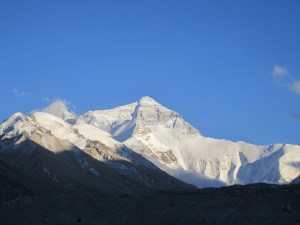
Sunset on Everest, view from base camp.

Sunset on Everest, view from base camp.

Gray Pearl Weave Gis

18 Wednesday May 2016

Posted by fenomkimonos in Gis for Women and Girls, Women's Gis

≈ Leave a comment

Tags

bjj kimonos, fenom kimonos, gis for girls, gis for women, gray pearl weave, women's bjj

Ladies asked for gray gis and our first batch is ready! Gi jackets are made of 550 gr pearl weave and pants are cotton ripstop with flat drawstring. Fenom signature F on the sleeves and a minimalistic flower design on the pants and jacket make a gorgeous, feminine gi. The color combination of gray fabric and dark purple embroidery is unexpectedly bright and striking. Gray gis are not IBJJF approved for competition but we expect to see them at women’s jiu-jitsu seminars and open mats everywhere. If you are one of the first customers who have received their gis in the mail, let us know what you think. Happy shopping, happy training!

fenom gray gi
fenom gray gi1
fenom gray gi2
fenom gray gi3

Just Another Day in the Office

01 Friday Apr 2016

Posted by Triin Seppel in BJJ Humor

≈ 1 Comment

Tags

april fools, fenom kimonos, gi design, women's bjj

People sometimes ask me, “What does a a typical day in a gi business owner’s life look like? Is it really as cool as it sounds like? Do you get to sleep in late and train whenever you want?” Well, here you can read about a day in my life. You be the judge.


Monday. The day started off shitty. My son decided suddenly that he didn’t like Fruit Loops any more and asked for a Pop-Tart. Pop-Tart? What? I don’t have Pop-Tarts. I had just spent over four dollars on this extra huge family size box of cereal and he wants Pop-Tarts. Get outta here! My daughter was angry about something I did or did not do, can’t remember what it was. She is always angry. Both of them knew I had a lot of work to do so they got a yelled at before it was even 7:30 AM.

It was an extremely important day; we had to push out a new women’s gi design and time was ticking fast. I got my two designers on the phone and told them the usual, “Make me something good.” The designers mumbled something about direction, that they need direction. I was like, “What? You’re the designer, you know what I want. Make it!” They kept arguing with me and it really escalated because you know, I’m the boss here. They started suggesting the regular gi design ideas: samurai, octopus, skull and some other nonsense. So I yelled at them and called them morons, idiots, imbeciles and entry-level clip art artists among other things. I know that this always makes them work hard so I kept my tirade going for a good 10 minutes threatening to fire everyone if I didn’t get a design in the next hour.

Then I hung up the phone, got me a fresh cup of coffee and dove into Facebook. It’s always good to spend time on Facebook admiring other people’s lives. Some of my friends have such perfect lives. The food is AMAZING, the husband is the most AMAZING and the training is always AMMMMAZZZINGG! Damn it.

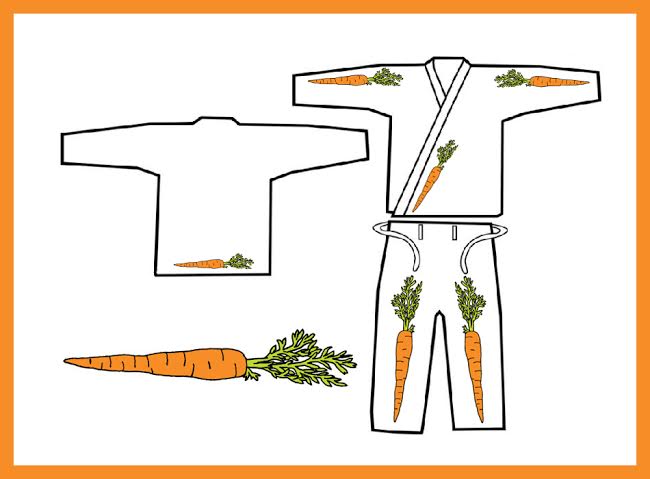
carrot

In about an hour I opened my email and guess what! There it was: THE email with an attachment. I knew I could squeeze a good design out of my employees! It was a picture of a carrot, an organic carrot to be specific. First I wasn’t sure if I liked it or not but the more I looked at it, the more it made sense. I’ve seen gis with all sorts of crazy designs so this is no different.

It will sell; I know it will. At this point I had nothing else so it was either a blank gi or the carrot. I went with the carrot. I stamped APPROVED on the design and thanked the designer for doing an outstanding job bringing my vision to life in such a vibrant manner.

It was a tremendously successful day. I felt accomplished and started counting the money I would be making when the new batch of gis drops. Did I train? No, I skipped that; grabbed a big bag of potato chips instead and plopped myself on the couch. Great day it was!

carrotgi

Happy April Fools Day!

Let’s Talk About Gi Pants Part I

30 Wednesday Mar 2016

Posted by fenomkimonos in Women's BJJ, Women's Gis

≈ 5 Comments

Tags

curvy pants, fenom kimonos, fenom pants, gi pants, gis for women, slim pants, tall pants, women's bjj

haremblueHow to choose great fitting gi pants? It can be very easy or tricky depending on where you fall on the size chart and one size definitely does not fit all! In the first part of the article we will talk about sizing and the second part will cover material options in-depth.

Size

Size chart shows the range of weight and height and should be used as a general guideline. If you are not sure about your size, always ask! There is a good chance we have found the correct size pants for someone with similar measurements and build. For a woman smack in the middle of the size bracket it is pretty easy to pick the right pair. At 5’7” and 145 pounds with athletic build, you can order a pair of A2s* and the pants will be a great fit. Someone at the same height but at 175 lbs with wider hips is probably going to ponder, “Should I go with the weight bracket or height bracket for size?” The answer is to go with the weight and choose curvy pants.  A tall lady at 5’10” and 145 lbs should go with the height bracket and pick tall pants for best fit.

Women come in so many varying shapes and sizes that weight and height are not the only thing we ask when helping with sizing. Sometimes we may need to dig deeper. Fibbing about your weight a little bit is fine but anything over ten pounds can result in incorrect fit. Being honest about your jeans size is appreciated; it helps prevent disappointment and costly exchange process.

  • Pants width

We recommend an easy fit test. When you put the pants on; pinch the loose material at the side of your hip at the widest point and if you have about 1.5-2 inches of fabric between your fingers, you have a good, pretty fitted pair of pants with just enough room to move around and no excess bagginess. When you have less than 1.5 inches material between your fingers, the pants will be too tight. Gi pants should fit a little loose, not skin-tight like yoga pants. It is uncomfortable to roll in super tight gi pants. Not only do they constrain movement but also make you feel self-conscious knowing that the back side is being exposed and the seams are about to bust open. If you have way more than 2 inches of material between your fingers, you will have very loose-fitting pants, almost like judo pants looseness. There is nothing wrong with loose fit, it is ultimately all about personal preference. Some women prefer fitted pants, some prefer looser cut.

Fenom ripstop gi pants
too tight
Fenom ripstop gi pants1
too wide
Fenom ripstop gi pants2
just right

If you are in between sizes or your weight tends to fluctuate 5-7 pounds within a month, having a pair of curvy pants is a great option. Extra couple of inches of room around hips and waist makes all the difference when you feel bloated or heavy. Regular, slim cut pants are perfect for the days or seasons when you are little lighter or want more fitted pants. If your goal is to lose some weight, we suggest to buy a pair of pants that fits right now, not at your goal weight. Tight pants will not motivate you more; they make training unpleasant. Buy a smaller size as a reward when you have reached your goal. Even though we make a variety of sizes, there are a few cases when a customer is out of our weight and height range and sadly we don’t have the perfect pair for that shape.

  • Pants length

When you put on a brand new pair of gi pants, the bottom of the pant leg should touch or sit on top of your foot. After shrinkage the pants will be right above the ankle bone which is the preferred length. If your pants start out at the ankle bone length, they will become capri pants over time. Some people don’t mind capri length gi pants but if you are a competitor, the pants may not pass inspection depending on how strictly the rules are followed. Do not hem the pants before you have washed them a couple of times. Most of the time hot water wash and dryer takes care of the extra length.


*Size refers to Fenom size chart and Fenom gi pants. Every brand uses slightly different size charts and our recommendation does not necessarily work with other brands’ pants.

Exchanges and Returns

29 Tuesday Mar 2016

Posted by fenomkimonos in Women's BJJ, Women's Gis

≈ Leave a comment

Tags

exhanges and returns, fenom kimonos, gis for women, women's bjj

Sometimes the gi you purchased is incorrect size or you happen to have buyer’s remorse and an exchange or return is in order.

This is a friendly reminder what not to return:

pethair

  • Gi covered in pet hair and lint. We love furry babies too but please run a lint roller over the gi before you pack it up.
  • Gi with stains (food, blood, dirt). Yes, odd but it has happened.
  • Washed items.
  • Hemmed pants or altered jackets.
  • Gi that has been worn to class. Try it on but don’t take it for a full test drive.
  • Clearance items. If you are not sure about sizing, please ask before purchasing. Clearance items are not to be returned and forcing the refund through by complaining to your credit card company is not cool.
  • Items with size tags or labels removed.

Thank you and happy training!

Happy International Women’s Day!

08 Tuesday Mar 2016

Posted by fenomkimonos in Fenomenal Women, Women's BJJ

≈ Leave a comment

Tags

fenom kimonos, girls' jiu-jitsu, like a girl, strong woman, women's bjj, women's day

“Woman is a being – therefore let her be.” – Anonymous

image (1)

Dr. Kim Freeman, PhD

26 Friday Feb 2016

Posted by fenomkimonos in Fenomenal Women, Women's BJJ

≈ 1 Comment

Tags

dr. kim freeman, female black belt, fenom kimonos, indiana jiu-jitsu, women's bjj, women's brazilian jiu jitsu, women's jiu-jitsu

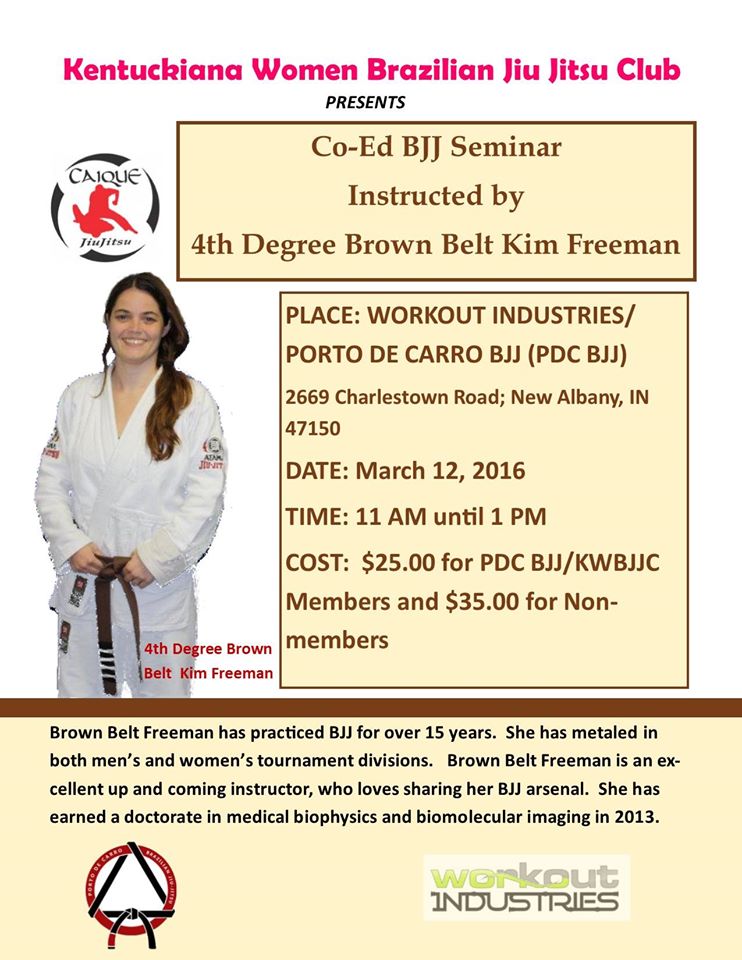
Dr. Kim Freeman, PhD is a four stripe brown belt, a mother and a philanthropist. She will be teaching a co-ed BJJ seminar in New Albany, Indiana, on March 12th and took some time off her busy schedule to talk about her life and training in Indianapolis. Everyone meet Dr. Freeman!

What do you do in real life besides training jiu-jitsu?

Currently I am a sales representative for the life science microscopy company, Olympus. I always loved science and knew it would be part of my future. I went to the University of Illinois at Urbana-Champaign and attained a Bachelor’s Degree in Cell and Structural Biology while minoring in Chemistry.

I started graduate school in New York but had to take time off for the birth of my daughter and relocation after the 9/11 attacks. After settling in Indiana, I re-entered graduate school and attained my master’s degree through Purdue University in a Cell Biology program, specializing in Lipid Biophysics.

My Ph.D. is through the Indiana University School of Medicine in Medical Biophysics, specializing in Biomolecular Imaging. My doctoral worked focused on deep tissue imaging of the sympathetic (think fight-or-flight) nerves in the heart and how they changed with myocardial infarction (damage from a heart attack). Most of my imaging work used a Olympus multiphoton microscope so when the position with their company in the area became available it seemed silly not to apply. I never would have guessed that I would end up doing what I am doing; life leads us in strange ways sometimes.

Work, family and jiu-jitsu keep me fairly busy. Every month or two I sneak in some philanthropy though. This month my daughter and I packed food for the needy. In April I am helping frame and wall a house for Habitat for Humanity. Giving back helps a person appreciate what they themselves have.

You have been training for 17 years. How do you stay motivated to keep going? What setbacks have you experienced?

Setbacks; there have been a few! I started training towards the end of 1998 at a small gym in NY. The overall attitude towards women in jiu-jitsu was very different back then, at least amongst the lower belts. Most all of the brown and black belts I met or knew were very encouraging though. I do not know how many times I’ve “quit” jiu-jitsu. Too many to count probably. I’ve had some severe injuries that kept me off the mat for months at a time. Most of the injuries were caused by lunkheads not controlling themselves or purposefully going rough to shake me away from the sport. There was a lot less control in the sport back then. Leaders of the gyms were blue belts, not black or brown. There is a certain refinement that comes with vesting years into this sport. That refinement is much more noticeable in schools led by higher belts. That was a luxury not many had back then though.

kimfreeman1

I took about a year and a half off for having my daughter. I was in a school that did quite a bit of warm ups, cardio and drilling so I was able to stick with that for several months before having to leave the mat. My daughter was born a few weeks after the 9/11 attacks which left us without jobs, or prospects of jobs. We picked up and moved to the Midwest. I joined my current gym in the spring of 2002 and have been with Indianapolis Brazilian Jiu-Jitsu ever since.

My then husband did not adjust well to family life which really limited my training time for a few years. My teammates were by my side though and after separation and divorce, I was able to get back on track with BJJ which has helped me discover how strong women can be. I bet most people take extended breaks from jiu-jitsu throughout training. Life happens. What matters more is that you come back to the sport. That you keep returning; persevering in the face of difficulty.

The motivations to continue on change constantly. As you progress in your jiu-jitsu journey, you grow and develop as a person. Therefore, the motivations for continuing the sport need to develop with you. Sometimes it is to overcome some internal demons, sometimes it is to prove something to others, sometimes it is for the comradery or it could be because your mind and body have learned to release stress when in the gym. After a while, it becomes a regular part of who you are. It is less motivation to stay in as it is an existential need to complete who you are as a person. BJJ transcends from something you do to being part of who you are. I don’t have a set motivation to keep going in jiu-jitsu, it is fully integrated into who I am. It is not the entirety of my being, but it makes me whole as a person.

What does your family think about BJJ? Does anyone else in your family train?

No one else in my blood line family trains. My daughter has been on the mat a month here or there, but has never stuck with it. My extended family has shown support now that I have climbed my way through the ranks which I am very thankful for. My nuclear family is not fond of it though. My jiu-jitsu family has been my lifeline. I am very grateful for all of them.

Do you enjoy competing? Do you remember your first tournament? What is your biggest accomplishment and what are you most proud of?

I used to compete quite a bit. My first tournaments were actually against men because there weren’t other women in my divisions. Especially after moving to the Midwest competing was limited. My divisions were empty most of the time and when there were other women, we did not have the luxury of weight classes or divisions. I took a few severe injuries because of it. My last tournament left me with some mild but permanent hearing loss. I have retired from competing because of that.

As for pride, that is a double edge sword. I think attaining my blue belt was amazing. I was under Marcio Simas at the time, back in 1999. I felt invincible, strong, and proud of this accomplishment. As the years progressed, I have been less proud of each belt. Not that they weren’t deserved, or unwanted; more because each was seen less as an insurmountable obstacle and more as an expected achievement. I have achieved more than most people every will, at my young age of (cough, cough, mumble). I expect myself to do more and go farther still. Am I glad to be doing it? You betcha! Would I continue without belt promotions? Sure thing. I just expect to achieve certain goals so it doesn’t seem like something to be prideful about.

Tell us a little bit about teaching jiu-jitsu. How often do you teach?

kimfreeman

I’ve taught at a few workshops and am starting to do a few seminars now. I really enjoy seeing young timid newcomers blossom and grow strong. This past weekend I did a workshop for new to the mat women. Four of them could not easily do a somersault at the beginning of the class. By the end of class, they had learned a few techniques, felt safe on the mat, rolled their first matches, and left smiling. They gained a touch of confidence and a little bit of awareness. Who knows if they stick with it? I hope they do. If they choose to though, I will be there for them to lean on.

Do you have any other hobbies besides jiu-jitsu?

There is something other than jiu-jitsu? I keep myself pretty busy but nothing I would call a hobby. I volunteer quite a bit for my community, helping take care of landscaping and the political mumbo-jumbo my condominium association has to deal with. Also, there is always something to do when you have children. My daughter is in the school band so I help there quite often. Before that there were sports or Scouts to keep up with. I’m a routine blood donor, having given over 10 gallons of blood or blood components throughout the years. When possible I go to my gym though. My jiu-jitsu family keeps me centered, humble, and encouraged.

Last words.

I greatly appreciate the support from Fenom! I had actually sent an email to a prominent gi company long ago about tailoring a gi towards women. The response was lacking, at best. It is great to see how women are not only becoming accepted in jiu-jitsu but encouraged and honored as well. There is seemingly no limit to what can be accomplished when people support each other and work towards the greater good.

Better tomorrows come from the actions and decisions we make today. Jiu-jitsu is a wonderful forum for this. BJJ tears away what we are not supposed to be and provides a supportive community to lean on while we gain the strength and perseverance necessary to be leaders in this world. Where we are today in jiu-jitsu seemed unfathomable just a few short years ago. Just imagine what it will be like in a few more.

kim_freeman_bjjseminar

← Older posts
Newer posts →

Enter your email address to follow this women's jiu- jitsu blog and receive notifications of new posts by email.

Facebook

Facebook

Popular Posts

  • Female Black Belts
    Female Black Belts
  • Gi Weaves 101
    Gi Weaves 101
  • Gi Weaves 102: Single Weave Gi and Double Weave Gi Mystery
    Gi Weaves 102: Single Weave Gi and Double Weave Gi Mystery
  • Let's Talk About Gi Pants Part I
    Let's Talk About Gi Pants Part I
  • Europe
    Europe
  • North America
    North America
  • Black Belt Corner with Luciana ''Luka'' Dias
    Black Belt Corner with Luciana ''Luka'' Dias
  • Part II of the Tale of Two Tall Ladies: Joy Pendell
    Part II of the Tale of Two Tall Ladies: Joy Pendell
  • Gold Weave Gi Comeback
    Gold Weave Gi Comeback
  • Middle East/Asia
    Middle East/Asia

Tags

affordable australian girls in gi beatriz mesquita bjj bjj bffs black friday brazil 021 brazilian jiu jitsu competition cotton drill crystal weave curvy pants emily kwok female black belt fenom gi raffle fenom kimonos gi giveaway girl's bjj girl's brazilian jiu jitsu girls' jiu-jitsu girls in gis gis for girls gis for women gracie humaita hannette staack jill baker jiu-jitsu jocelyn chang leka vieira leticia ribeiro like a girl Love luciana "luka" dias messy hair we don't care michelle nicolini Mother's Day pearl weave pearl weave plus purple belt socal wbjj sophia drysdale strong woman support women's bjj sweaty betties training should be fun white to black belt women's bjj women's brazilian jiu jitsu women's gis women's grappling camp

Blog at WordPress.com.

  • Subscribe Subscribed
    • BJJ For Women
    • Join 220 other subscribers
    • Already have a WordPress.com account? Log in now.
    • BJJ For Women
    • Subscribe Subscribed
    • Sign up
    • Log in
    • Report this content
    • View site in Reader
    • Manage subscriptions
    • Collapse this bar